
PCB rigid flex be used in harsh environments
A rigid flex circuit board is a combination of both rigid and flexible parts, designed to withstand the harsh conditions present in many commercial and industrial electronic devices. Its unique design is used in aerospace systems, automotive and medical devices, consumer electronics, and wearables. Using a PCB rigid flex in a device can provide thermal stability, increase reliability and simplify assembly while saving space, reducing weight, and increasing flexibility.
To produce rigid flex circuit boards, copper foils are electro-deposited and rolled to various thicknesses. The foils are treated to reduce bond degradation, augment adhesion and bond strength, and protect against oxidation. They are then bonded together by lamination, a process that uses heat and pressure to form an electrically conductive matrix. The result is a highly reliable rigid-flex PCB.
Despite their rugged construction, pcb rigid flex are still vulnerable to the same issues as all other printed circuit boards, including temperature and moisture. However, the use of advanced materials and a smart manufacturing process helps them perform reliably for longer in harsh environments.
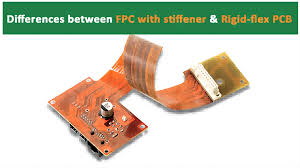
Can PCB rigid flex be used in harsh environments?
The key to making a rigid-flex circuit board more durable lies in the design process. It’s crucial to select the proper copper foil and treatment to resist environmental challenges, and to ensure the rigid sections are properly aligned and bonded with the flex sections. It is also important to ensure the flex areas have sufficient structural integrity to handle repeated bending. Moreover, proper bending radius selection and routing strategies help maintain consistent trace impedance and signal integrity, even in harsh environments.
Rigid flex is an excellent choice for a range of applications in harsh environments because it can improve device reliability and durability by lowering the number of connections and solder joints required. This eliminates the risk of loose or unstable connections and increases overall system performance. In addition, rigid flex PCBs are easier to repair and maintain, minimizing downtime and reducing maintenance costs.
The ability to bend and fold the flexible sections of the board offers designers more freedom in laying out circuits. This feature is particularly useful in applications where the board needs to conform to a specific shape or fit into a tight space. For instance, in medical devices like pacemakers, where compactness is necessary, rigid-flex PCBs can be tailored to meet these requirements.
While rigid-flex PCBs offer many benefits, they also present some manufacturing challenges. The process requires precise control over material properties, such as the thickness and flexibility of the polyimide layers. Designers must account for the bending radii to prevent damage during operation. Additionally, the cost of manufacturing rigid-flex PCBs is higher compared to traditional rigid or flexible PCBs due to the complexity of the design and the materials used.
Rigid flex is an ideal choice for harsh environment designs because it offers superior reliability and durability, even when subjected to repeated bending, abrasions, or impacts. In addition, it can accommodate tighter bends and folds than other PCB types without compromising on functionality. Choosing high-quality rigid flex from a reputable manufacturer will also guarantee long-term durability.