
Reformer Bed Good For Flexibility
Reformer Pilates is a popular low-impact workout that targets core muscles, stabilises the spine and stretches and lengthens the body. But how do you know if it’s the right kind of exercise for you? And what exactly is a reformer?
A reformer is a large frame-like structure with a sliding bed called a carriage that you can lay or stand on. It includes coiled springs to add intensity through resistance to Pilates exercises and various pulleys and handles to diversify the workout and target different muscle groups.
Invented by Joseph Pilates during World War 1 in an internment camp, the reformer was designed to allow people to engage in resistance-based movements without having to stand up. Since then, it has evolved into a versatile piece of equipment that can help anyone achieve an effective Pilates workout.
Reformers help improve flexibility by allowing the body to move through full ranges of motion and challenging every single muscle fibre. In addition, the reformer is able to strengthen the smaller muscles that are often overlooked in strength training and can have a real impact on enhancing balance, posture and overall flexibility.
The unique design of the reformer bed, which features a moving carriage and movable springs, also adds a degree of instability to workouts, which can challenge balance and core stability, improving posture, strength and overall stability. The reformer can also be adapted to suit varying fitness levels, allowing for progressive overload and consistent advancement.
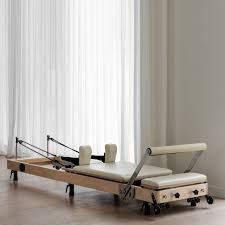
Is a Reformer Bed Good For Flexibility?
The reformer is particularly beneficial for those with an active lifestyle, as it provides the opportunity to strengthen the whole body in a relatively short amount of time. As a result, it helps prevent injury and improves performance in other sports and activities, such as cycling, running and swimming.
It also improves posture, as it strengthens the muscles that support and stabilise the spine and pelvis, allowing for better alignment. This is especially important for those with back issues, as it can alleviate pain and discomfort by promoting good posture and correcting the way we naturally stand and move.
As a bonus, the reformer provides sensory feedback. This is in contrast to mat Pilates, where many of the exercises are done lying down and can leave you without a clear sense of how your spine and pelvis are positioned or moving. By providing tactile information in the form of straps you can pull and bars you can hold, the reformer can give you a more holistic understanding of how your body is working, which can be very satisfying.
Having said that, if you’re new to Pilates it is best to seek the guidance of an experienced instructor. They can help to guide you through your Pilates practice safely, ensuring that you are using the apparatus properly and effectively to get the most out of it and to reduce the risk of injury or pain. They can also work with you to set achievable goals and ensure that your sessions are safe and appropriate for your condition or injuries.


